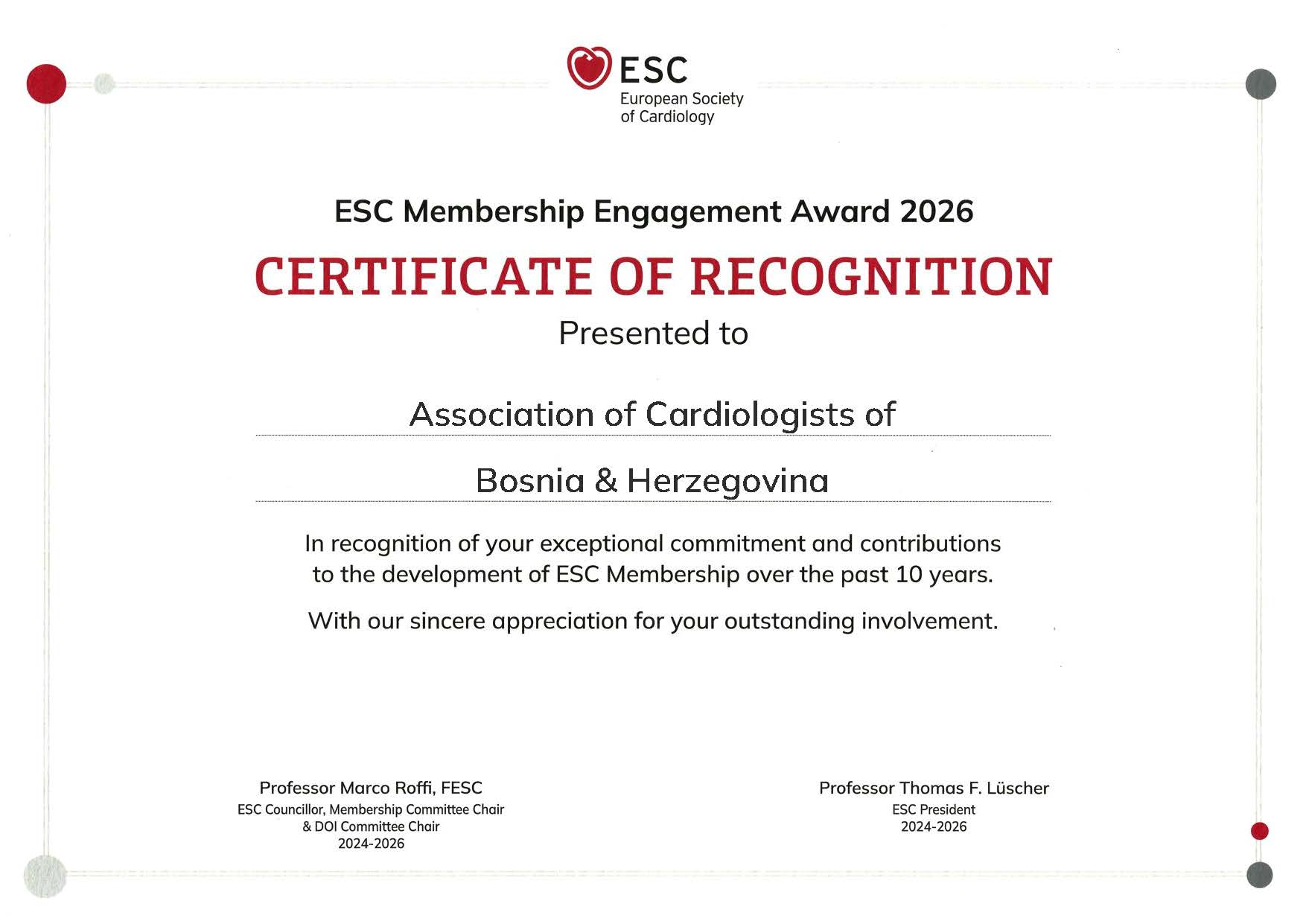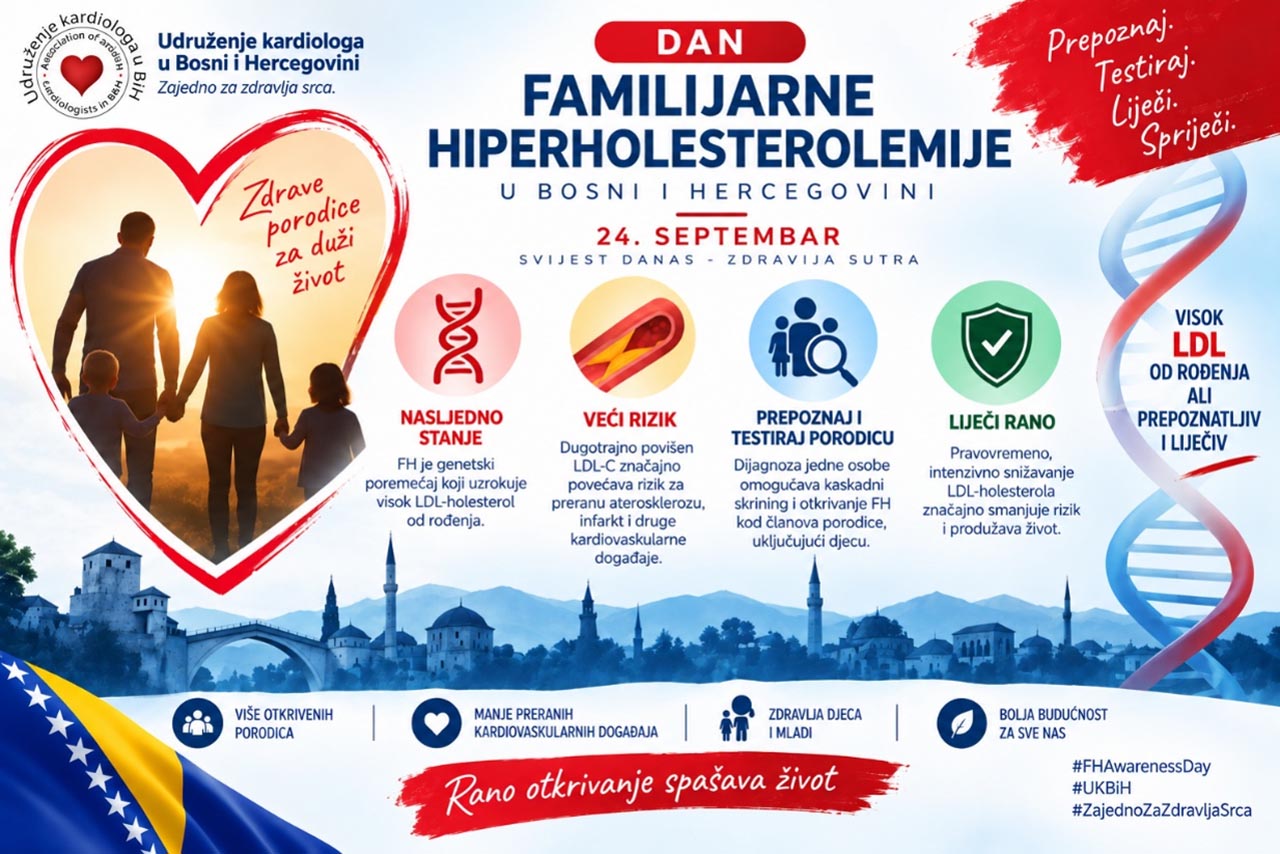
Povodom Svjetskog dana srca, Udruženje kardiologa u Bosni i Hercegovini organizovalo je druženje i preventivnu…
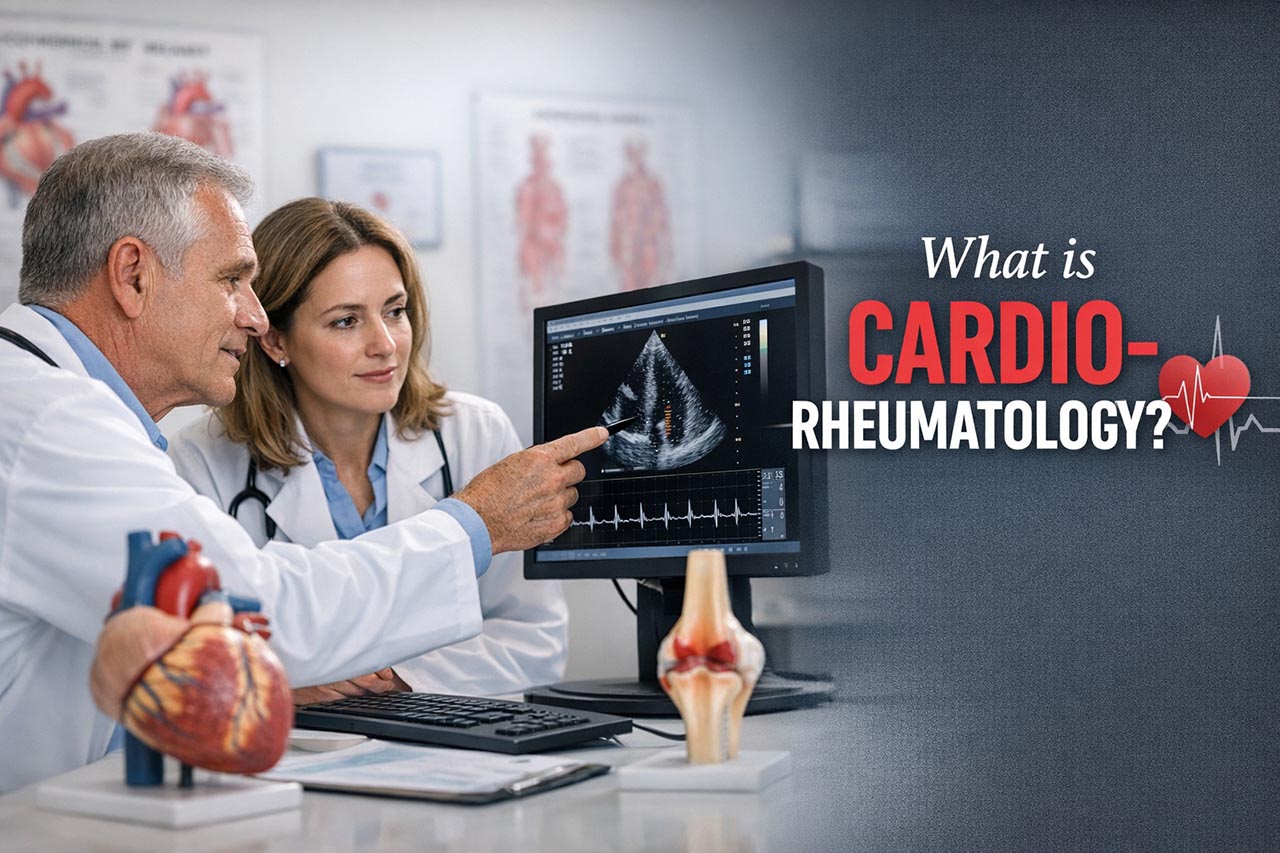
What is cardio-rheumatology?
Learning objectives
After watching this webinar, participants will be able to:
- comprehend the increased risk of patients with inflammatory joint diseases, recognising that they are in the same risk category as diabetic patients;
- identify inflammatory burden as the reason for increased risk of atherosclerotic CVD;
- understand the need for information about the increased risk of CVD amongst patients and health personnel; and
- appreciate the need for increased cooperation between cardiologists and rheumatologists.
Needs assessment and expected educational outcome
To shed light on how inflammatory joint diseases such as rheumatoid arthritis increase the risk of cardiovascular disease due to chronic systemic inflammation that damages blood vessels and promotes plaque buildup and rupture.
Main topic:
- Cardiovascular Disease in Special Populations
Related topic:
- Autoimmune/Chronic Inflammatory Disorders and Heart Disease
You may also register for this webinar scheduled on 24 June 2026 entitled “Cardio-rheumatology: an unmet need of CVD prevention” on the same topic.
For a complete overview on cardio-rheumatology, please visit the FOCUS edition webpage. (link available soon)
Session information
This webinar is designed for general practitioners, primary care doctors and general cardiologist but also cardiologists wishing to update their scientific knowledge on the topic.
During the webinar, you will be encouraged to send your questions by chat and interact with our key opinion leaders who will provide live feedback.
Technical settings
The webinar is available on PC and tablets. The use of a smartphone is not recommended.
To answer the MCQs during the live, you must allow pop-up windows.
A high-speed Internet connection is required (minimum 2 Mbps).
This educational programme is accredited for 1 CME Credit(s).
Each participant should claim only those hours of credits that have actually been spent in the educational activity.
Vezani članci